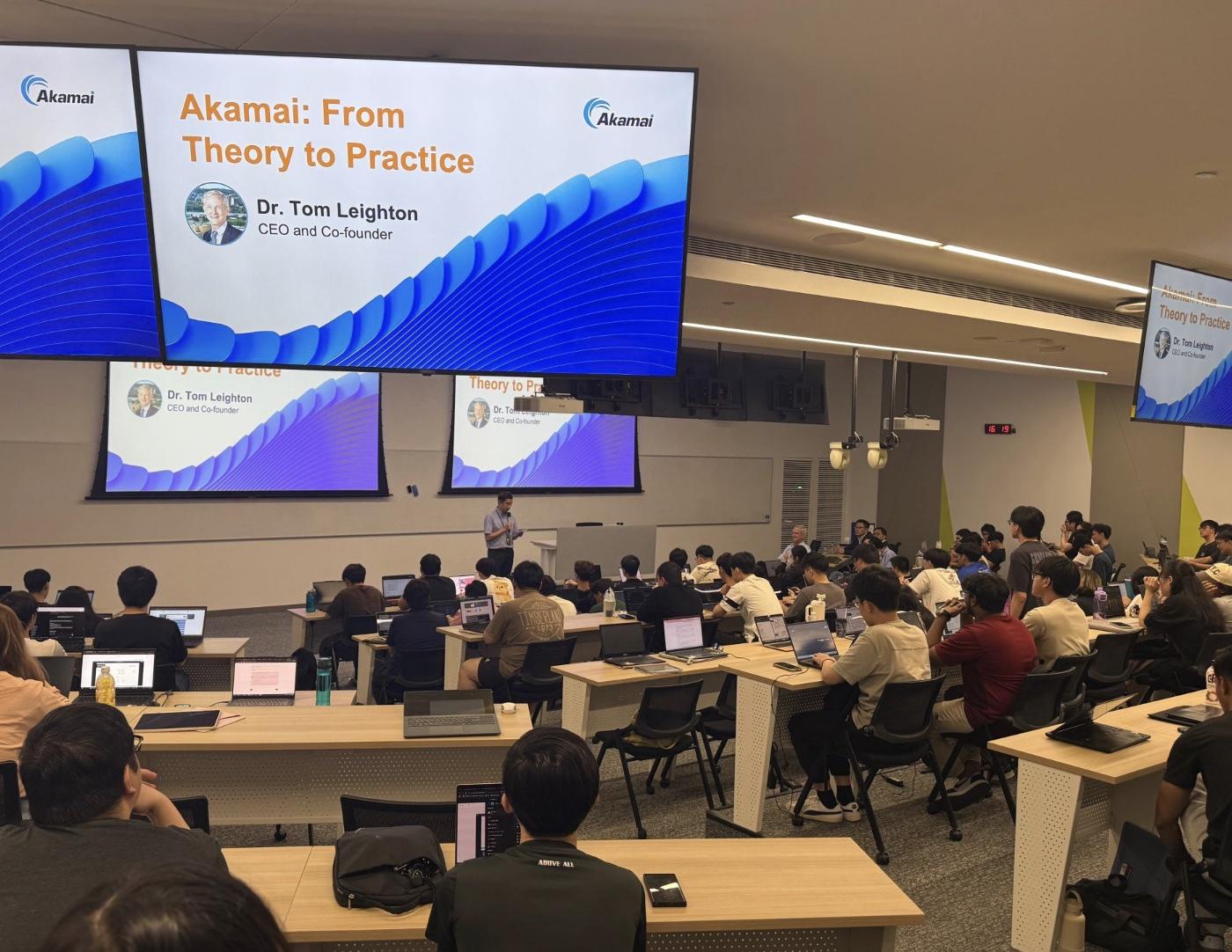
Akamai co-founder and CEO Dr Tom Leighton visited the Our Punggol Campus for an exclusive guest lecture with first-year Computing Science students from the joint SIT-UofG programme. Hosted through a collaboration involving Professor Sye Loong Keoh, UGS and Akamai Technologies Singapore, the session brought an industry founder’s perspective into the classroom.
Titled “Akamai: From Theory to Practice”, the lecture followed the journey from academic research to internet infrastructure. Leighton showed how ideas rooted in applied mathematics and distributed computing became a global content-delivery platform—and later expanded into cloud computing and cybersecurity.
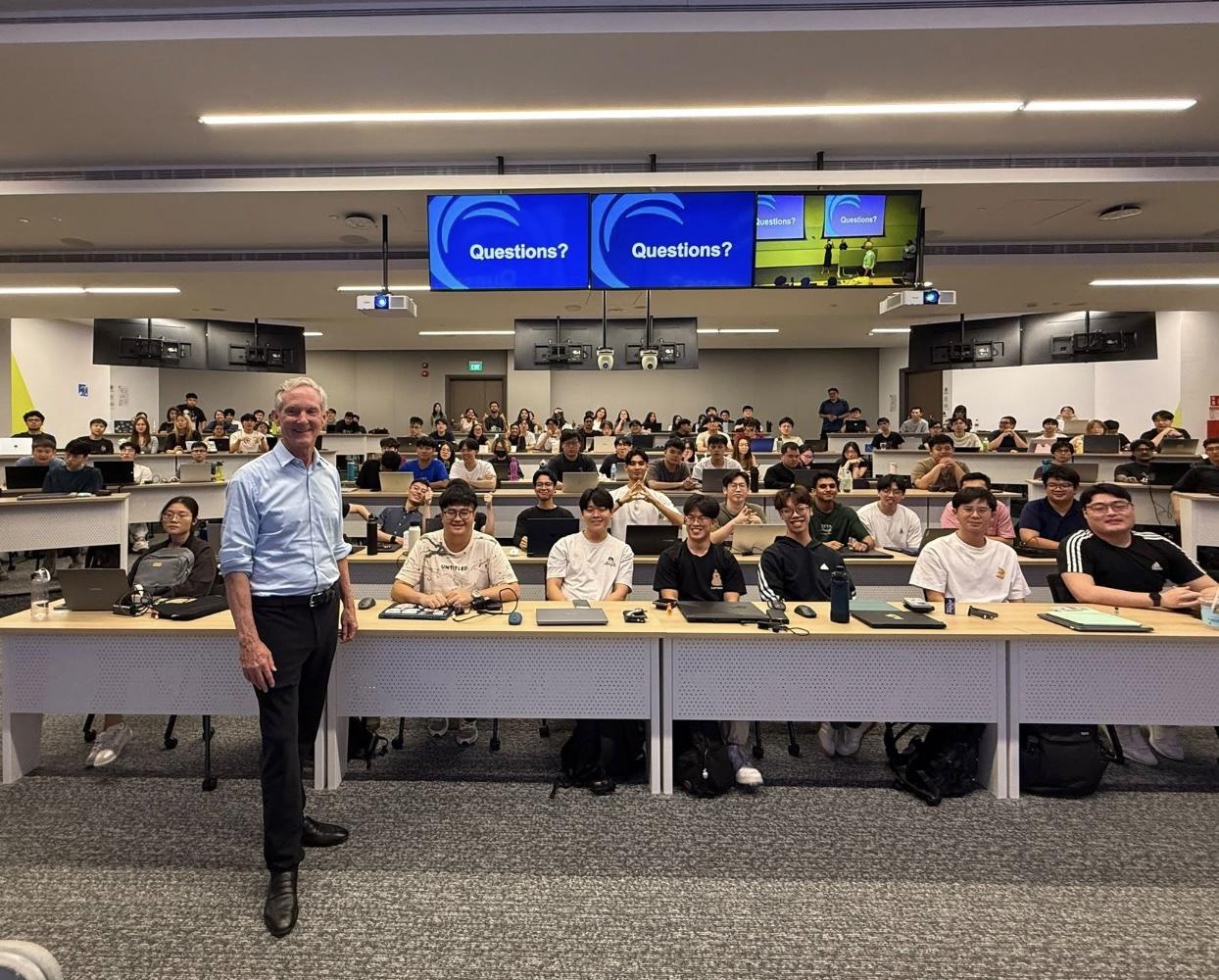
Leighton’s path began in academia. After graduating from Princeton, he completed his PhD in Applied Mathematics at MIT in 1981, joined the MIT mathematics faculty in 1982 and became a professor in 1989. In the 1990s, a challenge to address growing internet congestion led his research group to develop new approaches to distributing online content. He and graduate student Danny Lewin co-founded Akamai in 1998 to bring that work into practice.
The story was not presented as a straight line to success. Leighton spoke candidly about early rejection, including research papers that were turned down and an entrepreneurship-competition entry that did not place. For students beginning their own computing journeys, those setbacks became a lesson in testing ideas, learning quickly and continuing when early validation does not arrive.
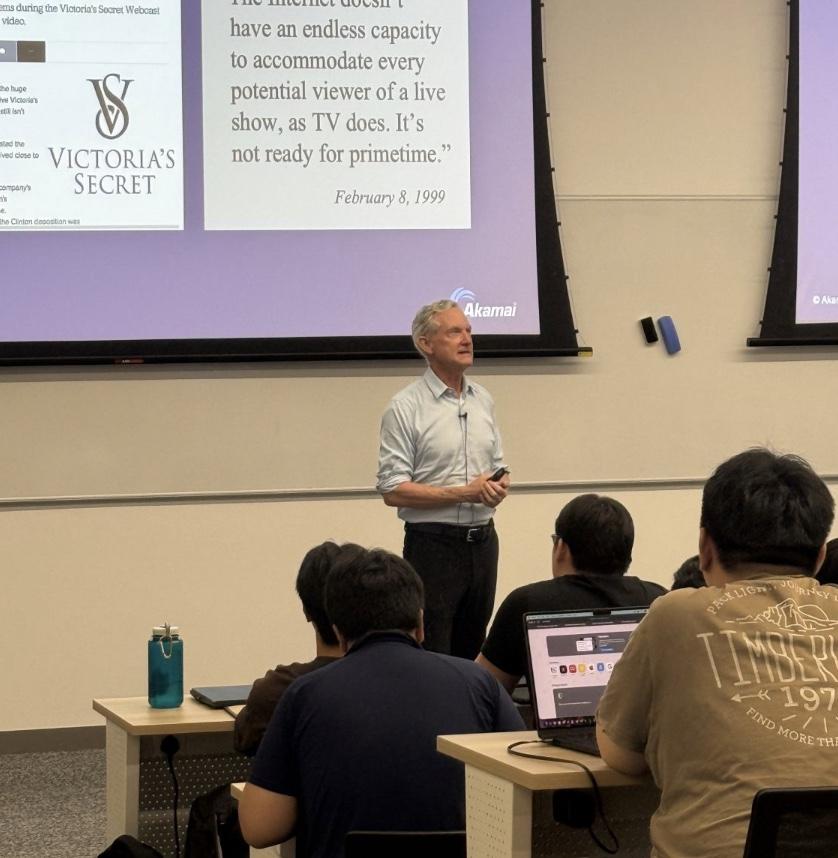
The discussion also explored how a technology company keeps adapting. Akamai began with content delivery, then evolved as internet traffic, cybersecurity risks and cloud requirements changed. Leighton connected that evolution to a broader leadership principle: strong technical foundations matter, but so does the willingness to rethink how those foundations serve a changing world.
Students challenged ideas, asked technical questions and connected computing theory with systems operating at global scale. The energy in the room reflected the purpose of the visit: giving the next generation of computing professionals a direct view of how research, resilience and leadership can combine to build technology that lasts.